Tips and Recommendations
1. Create a study plan
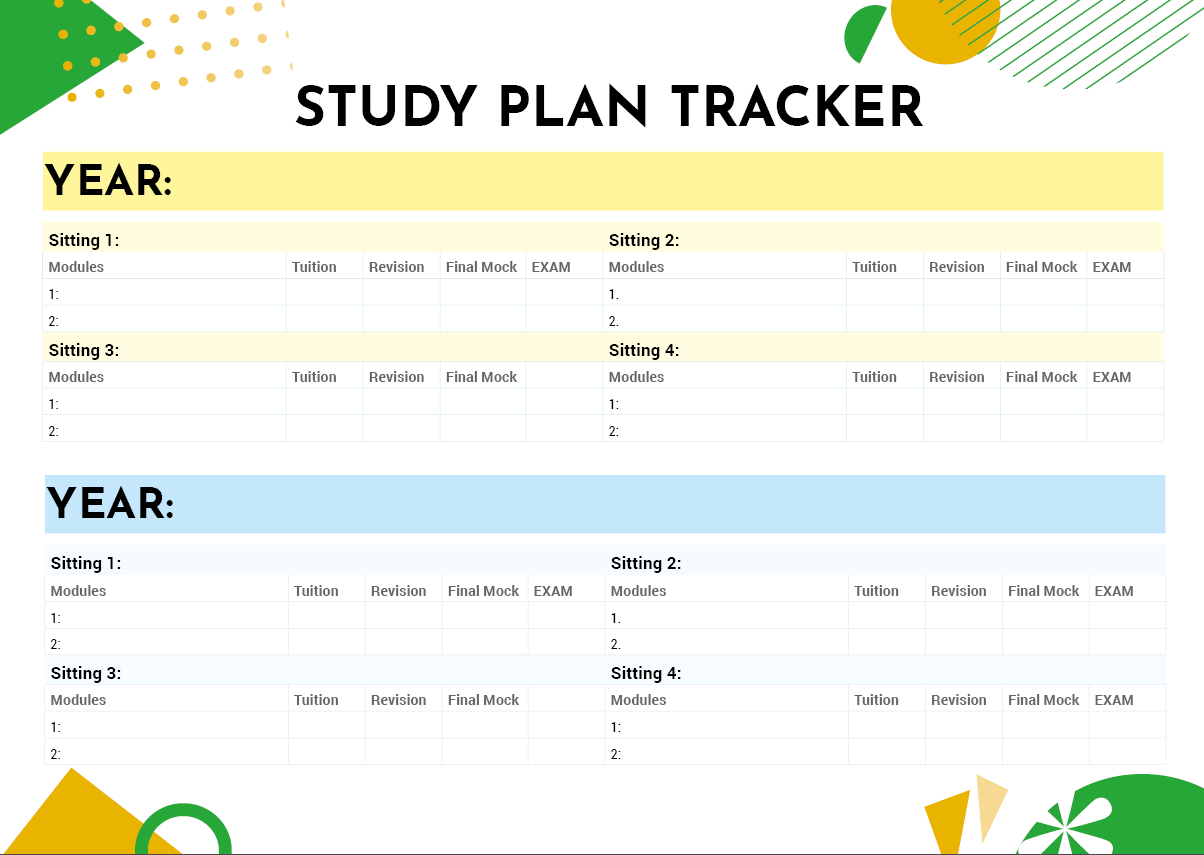
Use our Study Plan template to map out when your tuition, revision, mock exam and real exam dates are for each exam sitting. From there you can start to build in time in your diary to focus on learning the syllabus and practising exam questions. You should expect to put aside at least 10 hours of study time per week in the 10 weeks leading up to an exam sitting.
2. Maximise your chance of passing with a mock exam
To stay focused and boost your chance of passing, we recommend opting for a course with added structure and mock exams if you can. This might be a Classroom or Online Live tuition course that includes a marked course exam, coupled with a revision course with a marked mock exam included. Alternatively, you may prefer to study via FI Online which includes a marked course exam for a more flexible approach, then complete your exam preparation with a standalone Online Final Mock. Our data shows that by completing 2 practice exams before the real thing, you will significantly boost your chance of passing. For example, in March 2023, students thats took two practice exams had an 85% chance of passing, compared to a 57% chance of pass for students that did not take practice exams.
3. Book study leave
Ask your employer what their study leave policy is and maximise the use of any available time off to attend courses and exams. If you have limited or no study leave available, consider using some annual leave days to protect your study time, so that you can focus on your ACCA course without distractions at work or home. It may feel unfair to have to use annual leave to study, but think of it as a savvy way to get those study hours in without dramatically compromising other areas of your life.
4. Maintain momentum
It is essential that you stay focused and don’t let things slip. Once you start deferring exams and skipping exam sittings, you’ll find that the goal of qualifying gets further and further away. Tell friends, family, your manager, and colleagues about your exam dates to hold yourself accountable and prepare those around you for what is likely to be a busy time for you.
5. Seek help and support
Your tutor is on hand whenever you have a question so do pick up the phone or send them an email at any time.
6. Create a study group
You may benefit from teaming up with other students preparing for the same exam so that you can troubleshoot questions together and test your knowledge. Ask your classmates or look for social media groups to find like-minded students who are up for studying together once or twice a week online or in person.
7. Prioritise sleep
When you’re preparing for exams it’s easy to set aside late evening hours for study and therefore sacrifice sleep. However, missing out on all important shut-eye can have a damaging impact on your ability to retain information. Sleep helps you learn, memorise and recall information, as well as use your new knowledge to come up with creative and innovative solutions to problems. Studies have shown that students who prioritised sleep over cramming information late at night achieved higher test scores. You will simply perform better when you’re not physically or mentally tired.